SPECIAL SESSION #20
From satellites to small UAVs: radar instruments and techniques for microwave remote sensing of the environment
ORGANIZED BY
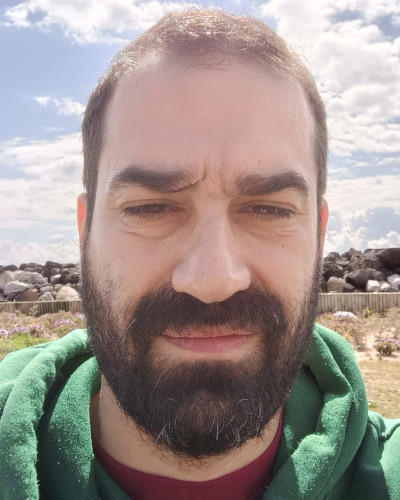 Giovanni Ludeno
Giovanni Ludeno
Institute for Electromagnetic Sensing of the Environment, CNR, Naples, Italy
 Manuela Bonano
Manuela Bonano
Institute for Electromagnetic Sensing of the Environment, CNR, Naples, Italy
 Carmen Esposito
Carmen Esposito
Institute for Electromagnetic Sensing of the Environment, CNR, Naples, Italy
 Stefano Perna
Stefano Perna
Parthenope University of Naples, Italy
SPECIAL SESSION DESCRIPTION
Radar systems exploit the properties of electromagnetic waves to detect, locate, track, and analyze remote objects. Within the broad spectrum of applications based on the exploitation of radar technology, in this Session we focus on techniques and systems specifically devoted to environmental remote sensing.
In this frame, the recent technological developments are characterized by different, somehow contrasting, trends. On the one hand, we register an unprecedented increase in spaceborne radar missions, operating at hundreds of kilometers above the Earth surface through microwave sensors, mounted on large satellite systems or constellations of small compact ones, for the observation of ever wider areas. On the other hand, the huge increase of small and cheap Unmanned Aerial Vehicles (UAVs) flying at tens of meters from sea level has fueled the development of miniaturized radar systems, allowing for flexible and time-responsive monitoring of specific and small areas. In this technological landscape, airborne radar systems flying at few kilometers from sea level represent an interesting compromise between spaceborne and droneborne ones, in terms of coverage, resolution, and operational flexibility.
All these systems benefit from recent advances in acquisition modes, electronic solutions, and data processing techniques, which are enabling new capabilities and applications in microwave remote sensing for both natural and built-up environments.
The Session is framed within this context and intends to provide a comprehensive overview of state-of-the-art radar systems and methodologies for environmental remote sensing, highlighting recent scientific and technological advances in terms of hardware, modeling, and data processing, relevant to the exploitation of radar data acquired from satellites, airplanes, or UAVs for microwave remote sensing of the environment.
TOPICS
Potential topics include (but are not limited to):
- Design of spaceborne, airborne, droneborne Synthetic Aperture Radar (SAR) systems;
- SAR missions;
- SAR data processing techniques;
- SAR interferometry and tomography;
- SAR polarimetry;
- Design of Ground Penetrating Radar (GPR) systems;
- GPR missions;
- GPR data processing techniques;
- Sub-surface radar imaging.
ABOUT THE ORGANIZERS
Giovanni Ludeno received his M.S. degree in Telecommunication Engineering from the University "Mediterranea" of Reggio Calabria, Italy, in 2011, and his Ph.D. in Electronics and Computer Engineering from the University of Campania "Luigi Vanvitelli," Caserta, Italy, in 2015. From November 2011 to October 2012, he was a Scholar at the Institute for Electromagnetic Sensing of the Environment, National Research Council of Italy (IREA-CNR), in Naples. He then worked as a Research Fellow at Vitrociset SpA, Rome, from October 2012 to January 2014. Since 2015, he has been a Research Scientist at IREA-CNR, where he leads the unit for the CN-MOST PNRR project and serves as Principal Investigator (PI) and Co-PI for the PRIN PNRR SEAWATCH and PRIN 2022 ARACNE projects, respectively. He also served as the Chair of an organized session at the IEEE MetroSea 2025 conference. Dr. Ludeno has coauthored over 80 publications in international peer-reviewed journals, conference proceedings, and books. His research focuses on applied electromagnetism, with a particular emphasis on remote and in situ sensing. He has also contributed as a Guest Editor for two Special Issue of the Journal of Marine Science and Engineering (MDPI), where he currently serves on the Editorial Board.
Manuela Bonano received the Laurea degree (summa cum laude) in Environmental Engineering from the University of Cagliari, Cagliari, Italy, in 2004 and the Ph.D. degree in “Infrastructures and Transportation” from the University of Roma La Sapienza, Roma, Italy, in 2012. From 2007 to 2016, she carried out her activity as a research fellow at IREA-CNR (Italian National Research Council), Napoli, Italy, working in the SAR interferometry field. In 2017, she joined the IMAA-CNR (Italian National Research Council), Potenza, Italy, as a permanent researcher, but since 2019, she has been with IREA-CNR, Naples, Italy, where she currently holds a Senior Researcher position. In 2011, she was a Visiting Scientist with the Earth and Planetary Science Department at the University of California at Berkeley (UCB), USA. She has been contributing, also with roles of responsibility, to different national and international research projects and initiatives, aimed at the effective exploitation of Earth Observation technologies to support environmental hazard management and risk mitigation scenarios. In particular, she is the Scientific Responsible of the PNRR Cascade Funding Project entitled “Monitoring buIlT-up envIronment throuGh dinsAr Time seriEs (MITIGATE)” in the framework of the project “PE RETURN - Multi-risk science for resilient communities under a changing climate”, PE 0000005 SPOKE TS1, named “Insediamenti Urbani e Metropolitani”.
Her main research interests are in the DInSAR field, working in the development of advanced multi-pass interferometric algorithms for monitoring surface deformation phenomena related to natural and anthropogenic hazards, specifically focusing on full-resolution DInSAR applications for investigating localized displacements associated with single buildings and infrastructures. Recently, she has been involved in developing and implementing innovative, parallel, and scalable multi-temporal DInSAR processing chains that can automatically and efficiently process large volumes of full-resolution, multi-frequency DInSAR data stacks, by exploiting advanced distributed HPC capabilities and Cloud Computing environments, as well as parallel programming techniques suitable for GPU devices.
Carmen Esposito received the Master’s degree (summa cum laude) in Telecommunication Engineering from the Università degli Studi di Napoli “Parthenope”, Naples, Italy, in 2012 and the Ph.D. degree in Information Engineering from the Università degli Studi del Sannio, Benevento, Italy, in 2016. Since 2012, she has been with the Istituto per il Rilevamento Elettromagnetico dell’Ambiente (IREA), Institute of the Italian National Research Council (CNR), Naples, where she is currently a Researcher. Her main research activities are focused on the processing of airborne synthetic aperture radar (SAR) data with particular emphasis on advanced SAR interferometry techniques and on the performance analysis of new-borne radar systems.
Stefano Perna received the Laurea Degree (summa cum laude) in Telecommunication Engineering and the Ph.D. degree in Electronic and Telecommunication Engineering, both from the Università degli Studi di Napoli “Federico II”, Naples, Italy, in 2001 and 2006, respectively. In 2003, 2005 and 2006 he received grants from CNR (Italian National Research Council) to be spent at the Istituto per il Rilevamento Elettromagnetico dell’Ambiente (IREA), Naples, for research in the field of remote sensing. Since 2006 he has been with the Dipartimento di Ingegneria (DI) of the Università degli Studi di Napoli “Parthenope”, Naples, where he is currently Professor of Electromagnetic Fields. He currently holds also the position of Adjunct Researcher at IREA-CNR, Naples. Since 2015 he collaborates with the Argentinian National Council of Technical and Scientific Research (CONICET) on activities relevant to the focusing and processing of airborne and spaceborne SAR data. In 2016 he was Visiting Professor at the Departamento de Teoría de la Señal y Comunicaciones of the Universitat Politècnica de Catalunya (UPC), Barcelona, Spain. He is responsible for several research projects relevant to the realization and testing of novel radar systems, and the focusing and processing of SAR data. From 2020 he is member of the Mission Advisory Group (MAG) of the PLATINO-1 SAR mission funded by the Italian Space Agency (ASI). From 2024 he is member of the scientific committee supporting the next National L-band low-frequency radar mission funded by the Italian Space Agency (ASI). From 2024 he is associate editor for IEEE Transactions on Geoscience and Remote Sensing.
His main research interests are in the field of microwave remote sensing and electromagnetics: airborne SAR data modelling and processing, airborne SAR interferometry, modelling of electromagnetic scattering from natural surfaces, synthesis of antenna arrays, antenna characterization and measurement in anechoic and reverberating chambers.