SPECIAL SESSION #21
Temporal Probabilistic Modeling for Self-Aware Autonomous Aerospace Systems
ORGANIZED BY
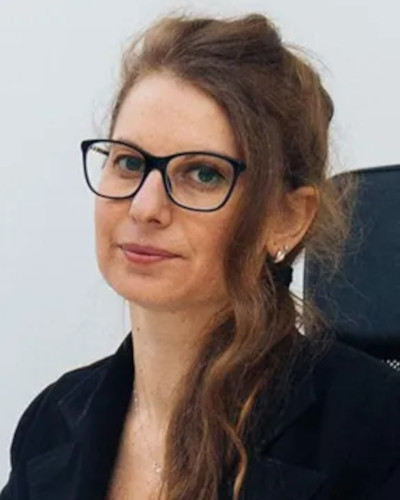 Pamela Zontone
Pamela Zontone
University of Genoa, Italy
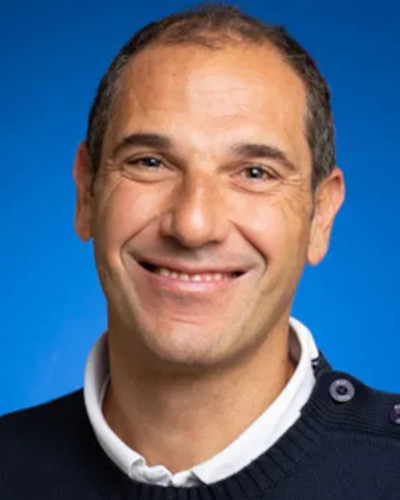 Lucio Marcenaro
Lucio Marcenaro
University of Genoa, Italy
 Carlo Regazzoni
Carlo Regazzoni
University of Genoa, Italy
 David Martín Gómez
David Martín Gómez
Carlos III University of Madrid
SPECIAL SESSION DESCRIPTION
Autonomous aerospace systems are increasingly required to operate in complex, uncertain, and safety-critical environments with limited human supervision. Unmanned aerial vehicles, autonomous aircraft, and cooperative drones must continuously perceive their surroundings, assess their internal state, reason under uncertainty, and adapt their behavior in real time. Achieving these capabilities calls for self-aware agents that can explicitly model both the external environment and their own internal states, including reliability, uncertainty, and system integrity.
Dynamic Bayesian Networks (DBNs) offer a well-established and interpretable probabilistic framework for representing temporal dependencies, causal relationships, and uncertainty in dynamic systems. While being data-driven approaches, DBNs enable principled reasoning about latent variables, system evolution, and anomalous behaviors, making them particularly suitable for aerospace applications where safety, explainability, and robustness play a central role.
This special session aims to bring together researchers and practitioners working on DBNs, probabilistic generative models, and self-aware autonomous agents, with a particular focus on aerospace and drone-based applications. Emphasis will be placed on modeling, inference, learning, and real-world deployment of DBN-based architectures that enhance autonomy, resilience, and explainability in aerospace systems.
TOPICS
The special session will cover a broad spectrum of topics related to Dynamic Bayesian Networks and self-aware autonomous aerospace systems, including but not limited to:
- Dynamic Bayesian Networks for Modeling and Inference in Aerospace Systems: Foundations, modeling techniques, and inference methods tailored to the temporal, stochastic, and hybrid nature of aerospace systems;
- Self-Aware Autonomous Agents and Probabilistic Internal State Representation: Self-awareness in agents, including probabilistic modeling of internal states using DBNs and related generative frameworks;
- Perception, Situation Awareness, and Sensor Fusion: DBN-based sensor fusion and situational awareness for UAVs and aerospace platform;
- Health Monitoring, Fault Diagnosis, and Safety Assurance: Applications of DBNs to system health monitoring, fault detection and diagnosis, prognostics, and safety assessment for UAVs and aerospace vehicles, supporting resilient and dependable operations;
- Multi-Agent and Cooperative Systems for Drones and Swarms: Distributed probabilistic modeling for coordination and decision-making in drone swarms;
- Case studies and experimental validations on real-world UAV and aerospace platforms: Experimental and real-world UAV and aerospace deployments focusing on measurement-based experimental validation for self-aware autonomy.
ABOUT THE ORGANIZERS
Pamela Zontone earned a Laurea in Electronic Engineering from the University of Udine in 2004, and a PhD in Information and Industrial Engineering from the University of Udine in 2008. From 2009 to 2011, she was a postdoctoral fellow at the Department of Information Engineering and Computer Science, University of Trento, working on the LivingKnowledge European project. In 2017, she joined the Polytechnic Department of Engineering and Architecture, University of Udine, where she worked in the field of sensor signal processing and machine learning techniques applied to biophysical signals. She is currently an Assistant Professor (RTD-a) at the Department of Electrical, Electronic, Telecommunications Engineering and Naval Architecture, University of Genoa. Her research interests include multi-modal signal processing for autonomous systems, unsupervised techniques for anomaly detection, multidimensional signal processing, biophysical signal processing, and machine learning.
Lucio Marcenaro is currently an Associate Professor of telecommunications with the University of Genoa, Italy. He has more than 20 years of experience in image and video sequence analysis. He has authored or co-authored about 200 technical papers on signal and video processing for computer vision. He is also an Associate Editor of the IEEE Transactions on Image Processing and IEEE Transactions on Circuits and Systems for Video Technology, the Technical Program Co-Chair of the 13th International Conference on Distributed Smart Cameras (ICDSC) and the First IEEE International Conference on Autonomous Systems (IEEE ICAS 2021), a Co-Organizer of the 2019 Summer School on Signal Processing (S3P), and the General Chair of the Symposium on Signal Processing for Understanding Crowd Dynamics. He is active within the IEEE Signal Processing Italy Chapter and was the Director of the Student Services Committee of the IEEE SPS from 2018 to 2021 and chair of the IEEE SPS Autonomous Systems Initiative (ASI) since 2023. His main current research interests are video processing for event recognition, detection, and localization of objects in complex scenes, distributed heterogeneous sensors, environmental awareness systems, environmental intelligence and bio-inspired cognitive systems, autonomous systems. He is a Senior Member of IEEE. Web: luciomarcenaro.github.io
Carlo Regazzoni received the Laurea degree in Electronic Engineering and the Ph.D. in Telecommunications and Signal Processing from the University of Genoa (UniGE), in 1987 and 1992, respectively. Since 2005 he has been a Full Professor of Telecommunications. Since 2012, he has been a member of the DITEN Department at UNIGE. From April 2017 to October 2017, he was UC3M-Santander Chair of Excellence at the Universidad Carlos III de Madrid. He has been involved in research on Signal and Video processing and Data Fusion in Cognitive Telecommunication Systems since 1988. His main current research interests are: Bio-inspired Signal and Video Processing and Recognition, Cognitive Dynamic systems, Distributed Data Fusion, Signal Processing for Wireless Communications and Localization, Ambient Intelligence, Software and Cognitive Radio, Multimodal Interfaces, Pervasive adaptation in embodied cognitive systems.
Prof. David Martín Gómez graduated in Industrial Physics (Automation) from the UNED in 2002, and holds a PhD in Computer Science from the CSIC and the UNED in 2008, where he was a predoctoral fellow at the CSIC from 2002 to 2006. He was also a researcher at the European Laboratory for Particle Physics (CERN, Switzerland, 2006-2008) and a postdoctoral researcher in Robotics at the CSIC (2008-2011). Currently, he is Full Professor at the Universidad Carlos III de Madrid (UC3M), and a member of the Intelligent Systems Laboratory (LSI) since 2011. His lines of research are perception systems, computer vision, sensor fusion, intelligent transportation systems, advanced driver assistance systems, autonomous ground vehicles, unmanned aerial vehicles, positioning and autonomous navigation of ground and aerial vehicles, and self-awareness, reasoning and decision-making under uncertainty in autonomous vehicles.