SPECIAL SESSION #10
Multi-Robot Aerial Systems for Advanced Remote Sensing
ORGANIZED BY
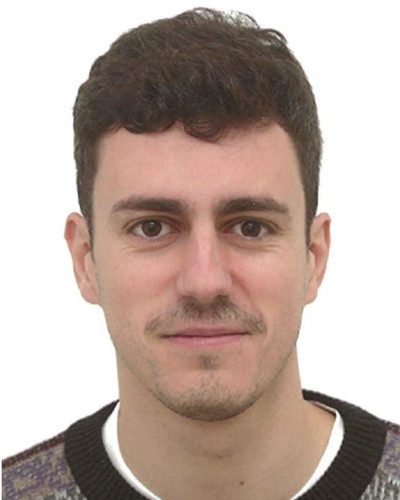 Pedro Arias Perez
Pedro Arias Perez
Universidade de Vigo
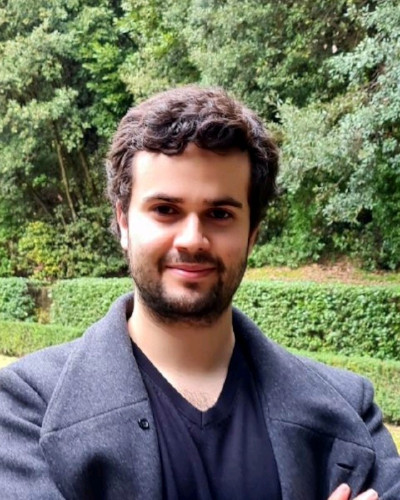 Miguel Fernandez Cortizas
Miguel Fernandez Cortizas
University of Luxembourg
SPECIAL SESSION DESCRIPTION
Remote sensing is rapidly evolving thanks to the emergence of multi-robot aerial systems capable of operating cooperatively, sharing information, and jointly acquiring heterogeneous sensing data. This Special Session aims to bring together recent advances in multi-UAV systems specifically designed for remote sensing applications, going beyond traditional single-platform mapping and situational-awareness approaches.
The session focuses on aerial robotic systems that coordinate sensing actions, distribute tasks in real time, and exploit multi-modal sensor suites—including LiDAR, hyperspectral/thermal cameras, RF payloads, and compact scientific instruments—to enhance data quality, spatial/temporal coverage, and robustness in challenging environments.
The objective is to gather work addressing the design of multi-agent sensing architectures, algorithms for cooperative perception, remote sensing mission planning, and system-level integration for real-world aerospace and environmental monitoring applications. Contributions may present fundamental research, novel hardware or sensing payloads, field-validated systems, or application-specific solutions.
TOPICS
Topics of interest include (but are not limited to):
- Multi-UAV cooperation strategies for remote sensing missions;
- Distributed sensing architectures and multi-modal payload integration;
- Collaborative sampling, adaptive surveying, and cooperative target tracking;
- Remote sensing in GNSS-denied, degraded, or hazardous environments;
- Aerial swarms for real-time environmental or structural monitoring;
- Onboard AI for edge processing and autonomous sensing decisions;
- Communication-aware sensing and inter-UAV data exchange;
- Field deployments and case studies demonstrating multi-agent remote sensing systems.
ABOUT THE ORGANIZERS
Pedro Arias-Pérez is an Assistant Professor at Universidade de Vigo. He holds a PhD in Automatic Control and Robotics (Universidad Politécnica de Madrid, 2025) with a dissertation on autonomous multi-UAV missions focused on navigation, execution control, and exploration. His research centers on multi-robot systems, planning, and remote sensing. He is author or co-author of 15 international publications and has been recognized in leading aerial robotics competitions, including ICUAS and IMAV. He regularly contributes to open-source robotics through JdeRobot and is one of the main developers of the Aerostack2 framework. He has also mentored several Google Summer of Code projects (2021–2025) and participated in the GSoC Mentor Summit 2024.
Miguel Fernandez-Cortizas is a postdoctoral researcher at the SnT – Interdisciplinary Centre for Security, Reliability and Trust at the University of Luxembourg. He obtained his PhD in Automation and Robotics from the Universidad Politécnica de Madrid (UPM), where he worked within the Computer Vision and Aerial Robotics Group. His research focuses on multi-robot aerial systems, autonomous coordination, real-time perception, and high-level cognitive architectures for collective decision-making. He has been a key contributor and project lead in the development of Aerostack2, a modular software framework for autonomous aerial robotics. He has participated in numerous international UAV competitions, including IMAV, ICUAS, and MBZIRC, where the teams he contributed to were awarded multiple times for their technical performance, and he has published research in top-quartile robotics journals and leading international conferences covering autonomous aerial robotics, multi-robot coordination, and remote sensing systems.